May 5, 2026
By, Hilary Gennaro
In the construction industry, we know electricity is one of the most potentially dangerous elements of a project, and that’s why we hire dedicated electricians for electricity-specific jobs. However, electricity is always around us, and even if we are not working with it directly, it can harm us if we don’t take the right precautions. Construction workers are second-most likely – next to electricians – to die in electricity-related incidents. Upwards of 5,000 injuries, and an average of 150 deaths occur on work sites each year. But it’s not just workers who need to beware: every citizen should understand how they can help prevent electrical accidents. It’s a startling figure, but it’s true: roughly 51,000 residential fires are caused each year by electrical malfunctions. (Statistics from Electrical Safety Foundation). The fact is, most of these accidents are preventable.
If you didn’t know, May is electrical safety awareness month. 2026’s Electrical Safety Month is focused on the following components:
- EV Charging Safety: Use only manufacturer-approved cables, avoid extension cords when charging, and have a licensed professional install your home charger.
- Counterfeit Awareness: Only purchase electronics with Nationally Recognized Testing Laboratory (NRTL) certifications, such as UL, ETL, or CSA to avoid overheating or fire risks. What do those classifications mean? UL electrical certification is a third-party safety designation from UL Solutions. ETL was founded by Thomas Edison and originally stood for Electrical Testing Laboratories, and means a product has been independently tested and found to meet North American safety standards. CSA (Canadian Standards Association) certification means that a product has been independently tested and meets safety requirements for both Canada and the U.S.
- Battery Recycling: Understand and use safe disposal methods for lithium-ion batteries, which can become volatile if damaged.
- Monthly Testing: Test Ground Fault Circuit Interrupters (GFCIs) and Arc Fault Circuit Interrupters (AFCIs) monthly using their “test” buttons to ensure shock and fire protection. Where do you find GFCIs and AFCIs? GFCIs are often found in wet or damp areas to prevent shock – check your bathrooms, kitchen, garage, and outdoor outlets. AFCIs are found in electrical panels protecting living spaces such as bedrooms, living rooms, and hallways from fire. They can appear as breakers OR outlets.
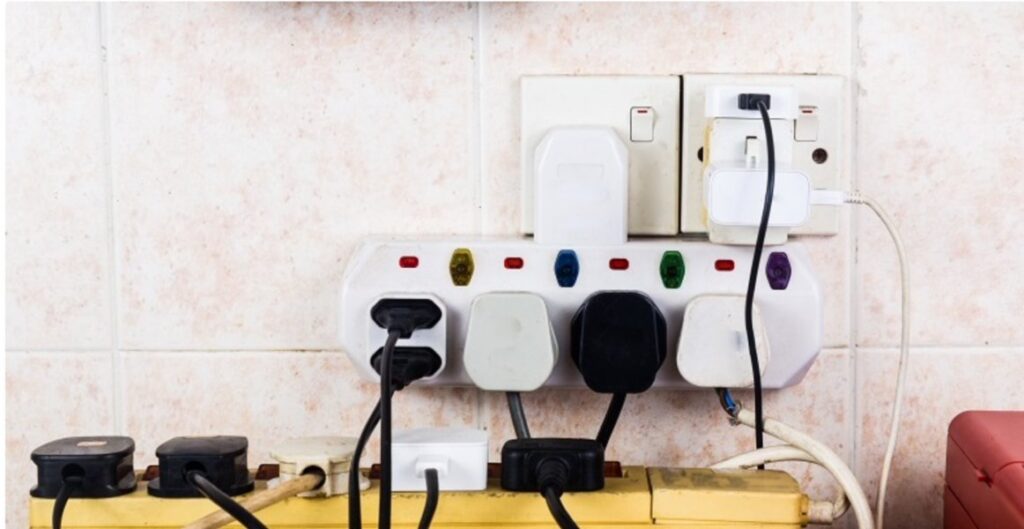
- Cord Care: Never run extension cords under rugs or furniture; trapped heat can cause fires. Remember, extension cords should only be for temporary use, they are never a permanent solution.
- Wattage Matching: Verify that light bulb wattage does not exceed the fixture’s maximum rating, to avoid melting wires.
- Panel Access: Maintain at least 3 feet of clear space in front of electrical panels for emergency access.
WARNING SIGNS OF ELECTRICAL TROUBLE!
!!! Warm Outlets Faceplates that are warm or discolored
!!! Unusual Noises Buzzing, crackling, or sizzling sounds from switches or outlets
!!! Flickering Lights Frequent dimming or flickering when large appliances turn on.
!!! Repeated Trips Circuit breakers that trip or fuses that blow frequently.
Knowledge and planning are all it takes to help keep you and your family safe from electrical accidents. If you aren’t sure if your home is safe enough when it comes to electricity, or you don’t feel comfortable doing a task yourself, call a local state-licensed electrician to come help. While a general safety inspector can tell you a lot about the issues your home may have, an electrician can help you fix them.